
If you have a sloped backyard and tried researching solutions only to end up with vague suggestions about plants and walls, here’s a post that gives you a clearer path forward.
Slopes introduce real engineering considerations, and Taylor Anthony 365 approaches them systematically, from drainage to plant selection. The right process for landscape design for sloped backyards starts well before any digging begins.
Why Thoughtful Landscape Design in Ponte Vedra Beach Makes All the Difference on Slopes
Designing for a slope in coastal Northeast Florida means accounting for:
- Sandy soils that erode quickly
- Intense summer rainfall
- Salt air
- Drainage challenges tied to elevation changes
A well-planned approach to landscape design in Ponte Vedra Beach considers those local factors before selecting a single plant or placing a single wall. Professionals build plans that balance structural stability, visual cohesion, and long-term maintenance, making challenging sites functional and enjoyable for many years.
Start With a Real Site Evaluation
Before any design work begins, a thorough site evaluation should drive every decision. On a sloped property, this means:
- Measuring grade and elevation changes
- Tracking water flow during rainfall
- Testing soil conditions
- Noting proximity to wetlands in St. Johns County
Ponte Vedra Beach soils are typically sandy, highly permeable, and prone to post-storm erosion, making early drainage planning essential. Skipping this step is the most common reason sloped projects run into serious problems.​
Solve Drainage Before Everything Else
Effective drainage solutions are the most critical element of any sloped landscape plan. Florida receives some of the most intense rainfall in the country, and a slope without controlled drainage channels can direct water toward foundations or neighboring properties.
Common systems include:
- French drains that intercept groundwater
- Swales that guide surface runoff across terraces
- Catch basins connected to underground pipes
- Downspout redirection that keeps roof runoff from accelerating down exposed slopes
Good drainage solutions also protect retaining walls and hardscape, as hydrostatic pressure from unmanaged water is the primary cause of wall failures.
Use Retaining Walls for Support and Durable Erosion Control
Retaining walls transform a steep grade into multiple stable levels. Each wall holds soil in place and creates new flat zones for planting or entertaining.
In coastal Florida, segmental concrete block systems handle ground movement without cracking. Steeper sections require gravel backfill, geotextile fabric, and a perforated drain pipe behind the wall to relieve water pressure. Walls built without these components shift and fail.
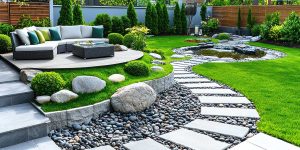
Integrating seating walls and stone steps at each level opens up your yard to practical landscape edging ideas that define zones and improve movement between terraces.
Apply Terraced Landscaping To Turn Elevation Into an Asset
Terraced landscaping divides a sloped yard into stepped flat zones connected by pathways or stairs. Each terrace shortens the effective slope, so rainfall soaks in rather than rushing downhill.
A typical design might layer a patio terrace near the house into a garden terrace below and a naturalized planting zone at the base, converting awkward, unusable space into functional outdoor living areas.
Address Slope Stabilization and Erosion Control Together
Even after walls and drainage systems are in place, exposed soil needs slope stabilization.
Erosion control blankets hold freshly graded material while plants establish. Root systems do the long-term work, which is why plant selection matters so much. Groundcovers with dense, fibrous roots, such as beach sunflower and Asiatic jasmine, anchor the soil effectively in our local climate.
Choose Native Plants That Work With Your Site
Native plants belong in virtually every sloped Northeast Florida landscape because they tolerate sandy soil and salt air far better than most alternatives.
Consider Florida species that perform well on slopes and reduce the need for fertilization, weed control, and irrigation once established, including:
- Firebush
- Muhly grass
- Cocoplum
- Dwarf yaupon holly
A Florida-friendly landscaping approach built around native plants creates slopes that stay stable and require much less intervention. Drip irrigation installed beneath mulch on each terrace prevents the runoff that standard sprinklers produce on grades.
Perfect Your Ponte Vedra Beach Landscape With Help From Taylor Anthony 365
Now that you understand the core elements of landscape design for sloped backyards, you can approach your project with realistic expectations. Taylor Anthony 365 serves Ponte Vedra Beach homeowners with comprehensive services, including:
- Landscape design and installation
- Drainage solutions
- Sod installation
- Shrub care and deep root feeding
- Fertilization
- Weed control
- Pest management
- Irrigation systems
Whether you want to avoid design mistakes from the start or need help with a slope that has underperformed, call Taylor Anthony 365 at (904) 230-3386 or contact us online to schedule your consultation.